The Micro: bit / Using the micro:bit:
The micro:bit is a pocket-sized miniature computer that enable the students to be creative with digital technology. As the students, this tool gives them the basic capability to learn coding and a range of programming skills. The micro:bit can be programmed for an array of unique functions, like as a games console, as music playlist, to flash messages, to be used as a digital watch or even a fitness tracker. The physical device has sensors that can identify movement, light, temperature and magnetism, it features 25 LED lights and is created with two programmable controls, it uses a radio receiver to converse between devices. When programming the micro:bit students connect the USB cable into the computer and use the ‘makecode’ classroom to create the code of their choosing (Micro:bit Educational Foundation, 2020).
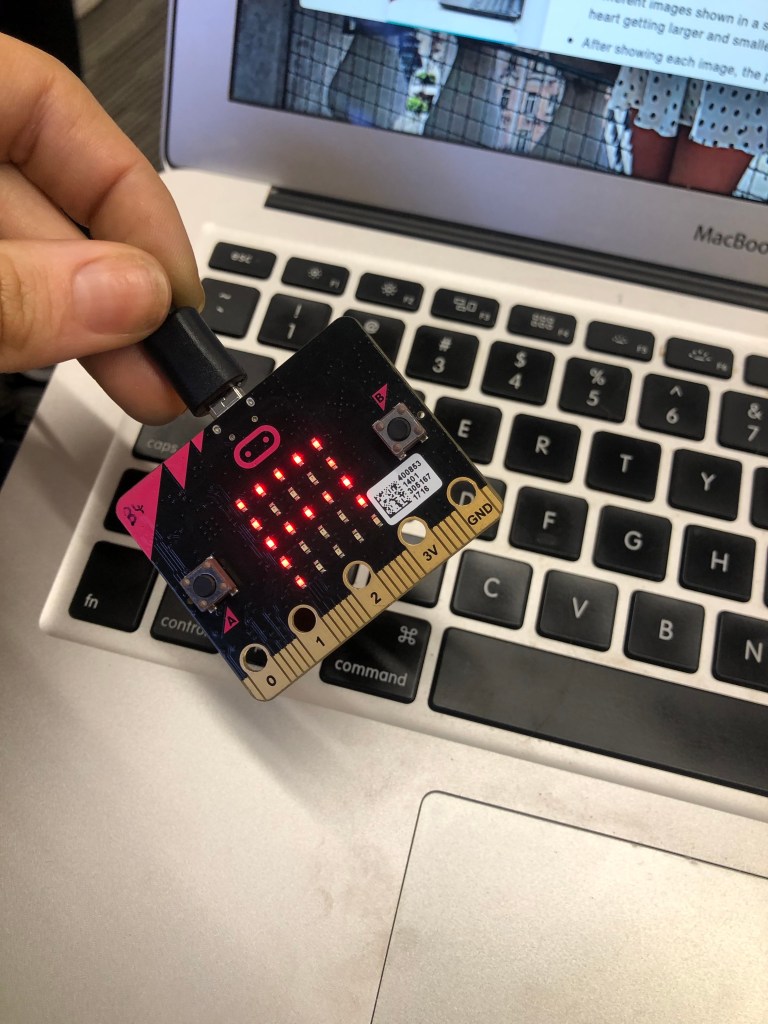
Micro:bit for Computational thinking?
New South Wales Education Standards (2017), defines computational thinking as the thought processes used when formulating a problem and finding its solution(s). It focuses not only on the ability to solve the problem but also the ability to find and formulate the problem in such a way that a computer can undertake (human or machine) (NESA, 2017). Additionally, Jeannette Wing defines computational thinking as “the thought processes involved in formulating problems and their solutions so that the solutions are represented in a form that can be effectively carried out by an information-processing agent” (NESA, 2017).
Furthermore, Vlahu-Gjorgievska, Videnovik, and Trajkovik (2018), state that the main goal of computational thinking is to elevate creative and critical thinking with the skill of using computers and algorithms. CT supports learning and development through 4 crucial steps; decomposition (problem-solving) pattern recognition (observing patterns, trends and consistencies), abstraction (recognising the general principles) and algorithm design (developing the step-by-step instructions for problem-solving) (Vlahu-Gjorgievska, Videnovik & Trajkovik, 2018).
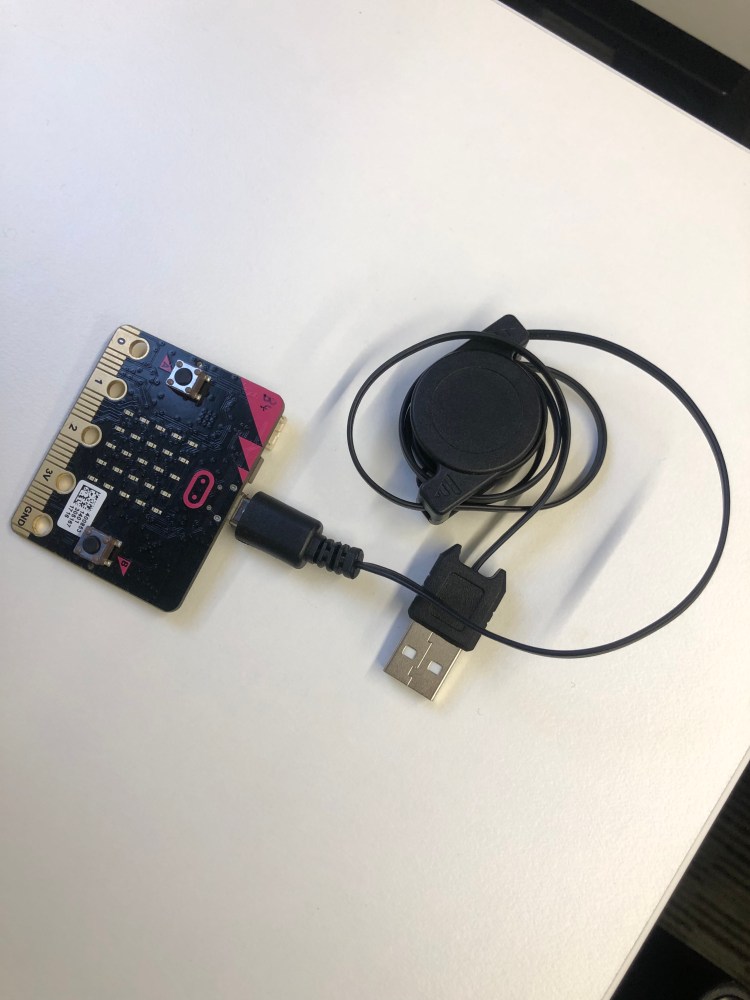
Now for the real question...
Can we as teachers use micro: bits in the classroom to encourage this style of thinking?
My answer is YES!
The micro bit tool can be effectively used to follow the criteria needed to develop students CT. Based on the research conducted by Lye (2014) and from my personal experience, I credit that using this technology in conjunction with a constructivist approach, authentic problem-solving activities and the opportunity for student reflection can provide students with the tools they need to enhance their higher order thinking and use the skills of CT (Lye, 2014). Teachers should implement this alongside the TPACK framework to effectively integrate technology into the classroom to support learning (Bower, 2017).
An example lesson focussing on CT can be seen here: https://microbit.org/lessons/computing-fundamentals-computational-thinking-1/
Dose the micro:bit enhance creativity?
Jordanous (2014) see’s computational creativity as a multidisciplinary action that combines the areas of artificial intelligence, cognitive psychology, philosophy and the arts. The aim of this model, is to replicate or innovate creativity using a computer, to construct a program or computer capable of human-level creativity or to design programs that can enhance human creativity without essentially being creative themselves (Jordanous, 2014). After researching ways to use the micro:bit, using it myself and creating lessons I could implement into the classroom, I have found the possibilities to be creative are endless. The micro:bit can be used in ways I could not have possibly thought of myself and clearly meets the above criteria.
References:
Bower, M. (2017). In design of technology-enhanced learning: integrating research and practice. Emerald Publishing.
Jordanous, Ph.D., A. (2014). What is Computational Creativity? The Creativity post, 1.
Lye, L. T. (2013). Opportunities and Challenges Faced by Private Higher Education Institution Using the TPACK Model in Malaysia. Procedia – Social and Behavioural Sciences. 91, pp. 294-305.
Micro:bit Educational Foundation (2020). https://microbit.org/
NESA. (2017). K-6 Science and technology syllabus.
Vlahu-Gjorgievska, Elena; Videnovik, Maja; and Trajkovik, Vladimir. (2018). “Computational Thinking and Coding Subject in Primary Schools: Methodological Approach Based on Alternative Cooperative and Individual Learning Cycles. Faculty of Engineering and Information Sciences – Papers: Part B. 2276. https://ro.uow.edu.au/eispapers1/2276


Hi Rebecca,
Reading your blog allowed me to gain more understanding about CT. It would have been great if you included examples of how micro:bit satisfies the four critical steps of CT (decomposition, pattern recognition, abstraction and algorithm design). Good selection of the video clip, the animations kept me interested!
LikeLike
Thanks for your comment! After looking at your comment I agreed and decided to further investigate this and i found this resource which focuses on the goal of the CT to enable students to recognise a problem and have the confidence in attempting to solve said problem using their knowledge of the technology. The resource provides lesson ideas for stage 3 students that each satisfy the four critical steps of CT. Ive provided the link below if you are interested.
Click to access classroom-ideas-5-6-microbit-metal-detector.pdf
LikeLike