Augmented reality in education:
Augmented reality (AR) is outlined as a computer created virtual view of the real-world (Schueffel, 2017). AR integrates virtual objects into a physical real-world setting. Through a pedagogical lense, AR is an emerging technology that has been used on a minimal level in schools, although research finds AR can be used to engage students on a profound level with activities and concepts that are usually inaccessible. Moreover, AR can be used to create authentic learning experiences that combines real-world experiences into the classroom setting (Southgate, 2018). An example of using AR in schools can permit students the ability to visualise generally inaccessible phenomena, like virtual objects, complex relationships, and abstract concepts. This shows AR has the potential to support injury-based learning and can be incorporated throughout all KLA’s, in a variety of different means. (Southgate, 2018).
Augmented Reality in learning:
Sandbox:
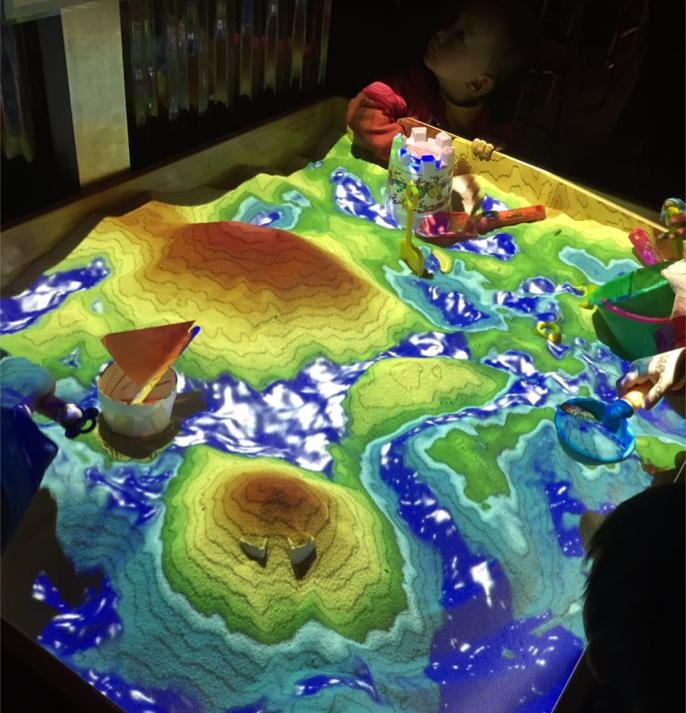
Sandbox in an AR technology where students are able to control and adjust a topographical map and natural hazards. The technology is used via a hands-on exhibit combined with 3D visualisation tools that project the map onto a physical sandbox where students create using the sand, can make it rain, and form natural foundations. This app could be specifically used in the Physical World content strand in Science where students investigate natural disasters. The app allows students to create a volcano and emulate an eruption. The students could be tasked to explore the effects of the volcano eruption, or how using a topographical map could be used to predict a volcano eruption.
SkyView:
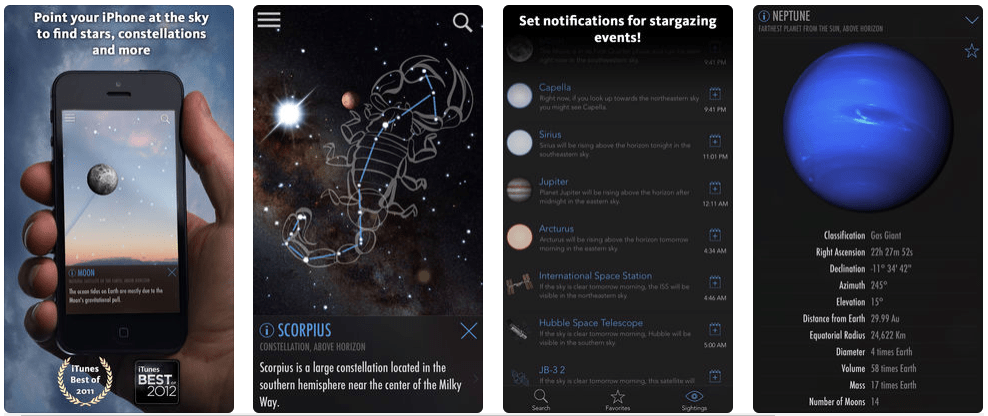
SkyView applies AR via the camera on a mobile/tablet device. The app illustrates an interactive representation of space, comprising of stars, planets and space stations. To effectively use the app students are required to move their mobile/tablet device around the room and the app will move accordingly to display the various areas of space. Students can further investigate the elements in space by tapping on them and the app will reveal a page of information associated to the particular element. This can be specifically used in Earth and Space content strand in Science where students investigate the distance between earth and the sun and the effects the sun has on the earth.
Augmented Reality in fostering creativity:
As educational researches explore the benefits of using AR in classrooms, AR becomes increasingly more popular, and the way teachers implement AR in their classrooms will continuously change. As a result, teachers’ knowledge of emerging technologies and pedagogical impacts will create more opportunities for AR to be explored in classrooms and facilitate students’ creative thinking. Bower et al., (2014) demonstrates using AR in the process of gaining and applying knowledge as an autonomous process, AR can be used to support students to use higher order thinking skills as a means for creative thinking.
References:
Bower, M., Howe, C., McCredie, N., Robinson, A., & Grover, D. (2014). Augmented Reality in education – cases, places and potentials. Educational Media International, 51(1), 1-15. DOI: 10.1080/09523987.2014.889400
Schueffel, Patrick (2017). The Concise Fintech Compendium. Fribourg: School of Management Fribourg.
Southgate, E. (2018). Immersive virtual reality, children and school education: A literature review for teachers. DICE Report Series Number 6.
 Rebecca Pashley